BigData@Heart – RATE-AF: Atrial Fibrillation
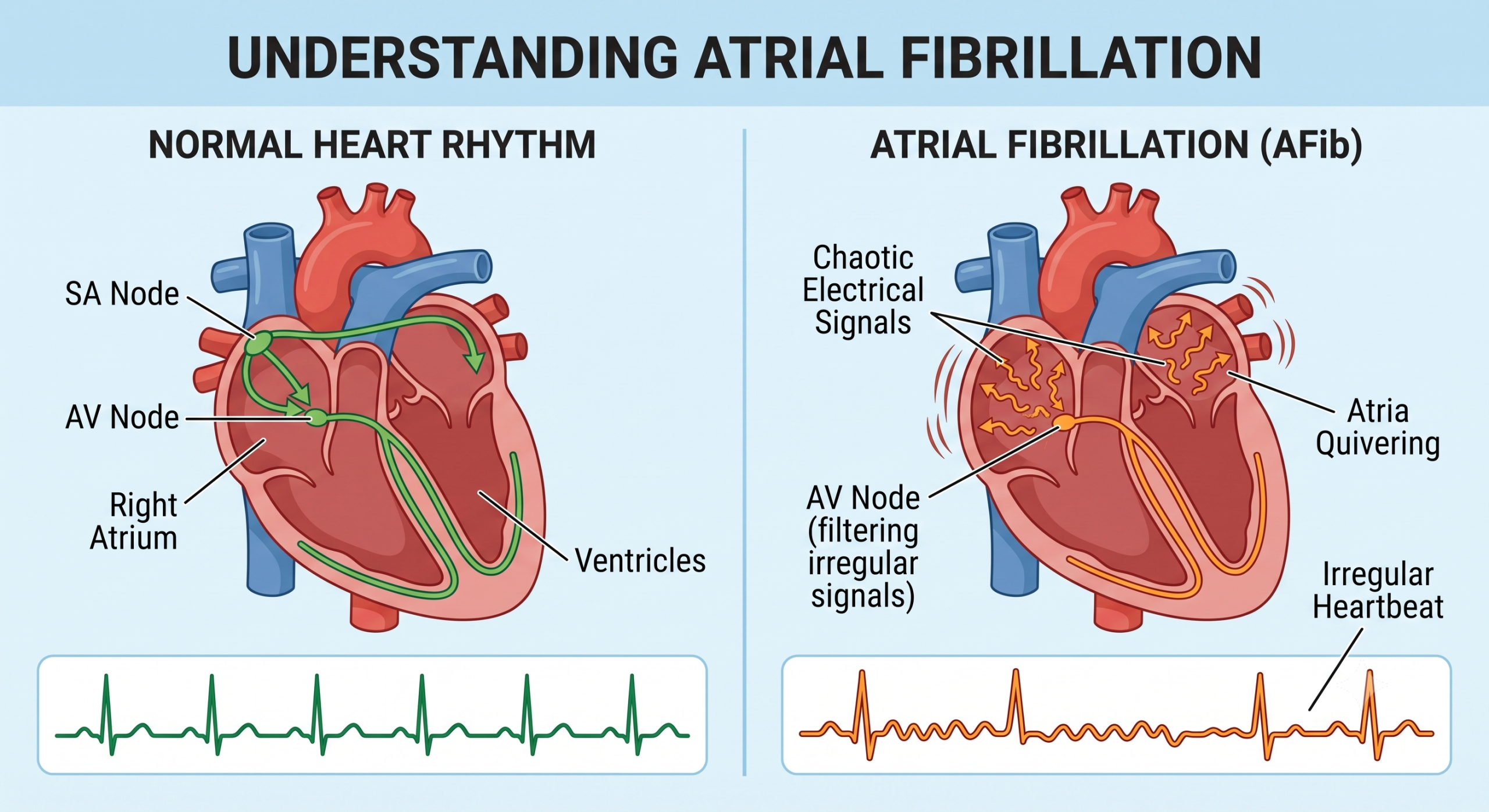
The RATE-AF trial (RAte control Therapy Evaluation in permanent Atrial Fibrillation) represents a landmark shift in how we manage one of the world’s most common heart rhythm disorders. Funded by the National Institute for Health and Care Research (NIHR) and supported by the EU IMI2 BigData@Heart program, this study is rewriting the rulebook for treating Atrial Fibrillation (AF)—particularly for older patients with multiple health conditions.
The Big Debate: Digoxin vs. Beta-Blockers
Traditionally, beta-blockers (like bisoprolol) have been the first-line choice, while digoxin—a 240-year-old medication derived from the digitalis plant—was often reserved as a second-line option for “sicker” patients.
The RATE-AF trial is the first head-to-head randomised trial to directly compare these two strategies in 160 patients (average age 76).
Key Results
The results, recently published in Nature Medicine (2024), provide a surprising and hopeful outlook for patients:
- Equivalent Heart Rate Control: The study found that digoxin and beta-blockers are equally effective at controlling heart rate both at rest and during physical exertion.
- Fewer Side Effects: Patients randomised to the digoxin group reported significantly fewer adverse events. In fact, those on digoxin were less likely to experience the “washed out” feeling or side effects often associated with beta-blockers.
- Improved Symptoms: Digoxin was found to improve patient-reported symptoms and functional capacity (how well patients can perform daily tasks) more effectively than beta-blockers over 12 months.
- Heart Strain: Digoxin was also shown to reduce NT-proBNP levels (a blood marker of heart strain) and to improve cardiac function.
The Power of Wearables and Big Data
A unique aspect of RATE-AF was its use of remote monitoring. Participants wore consumer-grade devices and used phone sensors for six months, generating over 140 million heart rate data points.
This “Big Data” approach proved that wearable technology could predict a patient’s functional class just as accurately as a traditional in-person 6-minute walk test or an ECG. This suggests a future in which patients can be safely monitored from their own homes, reducing the need for frequent, tiring hospital visits.
Impact on the NHS: Saving £100 Million a Year
The RATE-AF trial wasn’t just about clinical outcomes; it looked at the bottom line for the healthcare system. Because digoxin led to fewer hospital admissions and fewer serious side effects.
This is why RATE-AF was featured in the NHS 10-Year Health Plan. It serves as a “gold standard” case study for:
- Remote Monitoring: Moving care from the hospital to the home.
- Cost-Effectiveness: Using existing, low-cost medications more effectively.
- Patient-Centred Research: The trial was co-designed by patients, ensuring the outcomes measured, such as quality of life, actually mattered to people living with the condition.
As the NHS moves toward a digital-first future, the lessons from RATE-AF will be vital in shaping a more sustainable, patient-focused healthcare system.
Learn More:
- Full Study Results: Nature Medicine (2024)
- Official Trial Registry: RATE-AF Clinical Trial
- NHS Policy: Fit for the Future: 10-Year Health Plan (pg 116)
- Big Data at Heart