Dexcom integration into RADAR-base – Internship
Introduction:
Hi everyone, I’m Chin-Erdene, and I’m from Mongolia. I’m an international student at the University of Washington studying Computer Science. This summer, I had the opportunity to work with the RADAR-base team at King’s College London, where I integrated Dexcom’s continuous glucose monitoring system to enable the collection and analysis of patients’ glucose levels.
Overview:
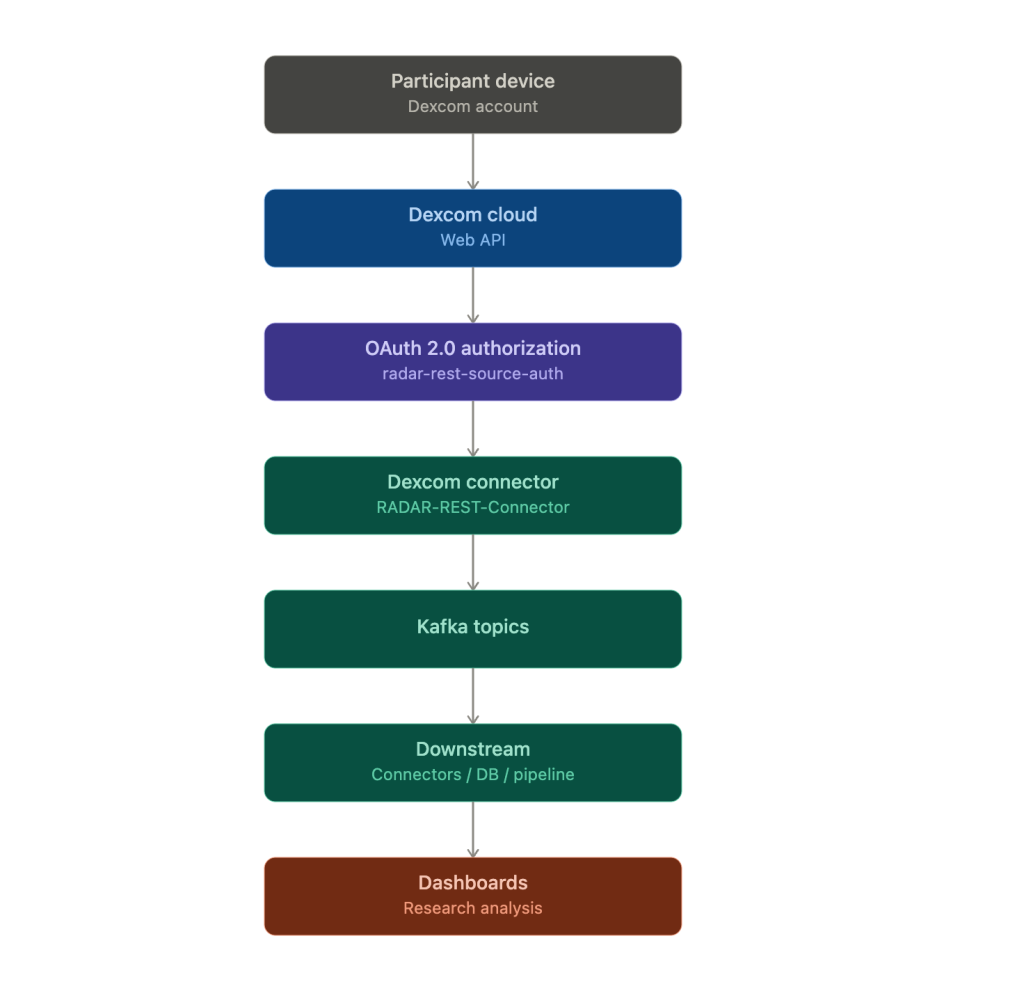
This project integrates Dexcom continuous glucose monitoring (CGM) data into the RADAR-base ecosystem, enabling it to be used alongside other wearable and mobile data streams for research and remote monitoring. The Dexcom API is RESTful and uses OAuth 2.0 for authentication, providing secure access to CGM data for third-party applications.
The work involved touching several RADAR-base repositories, including:
– RADAR-REST-Connector – Implemented a new REST connector module, including routes and data converters for the Dexcom API. This work followed the patterns established by previous Oura integrations in the repository.
– radar-rest-source-auth — Handled OAuth 2.0 authentication and authorization flows for accessing the Dexcom API. This integration follows the patterns established by previous Oura implementations in the repository.
– RADAR-Schemas — Added and aligned Avro schemas for Dexcom data streams, ensuring compatibility with the RADAR-base data pipeline.
– RADAR-Kubernetes — Deployed the connector and integrated it into the RADAR-base platform stack.
Goals:
The goal of this project was to provide a production-ready ingestion pipeline for Dexcom CGM data, following the patterns established by other wearable integrations such as Oura. This integration enables RADAR-base studies to remotely monitor continuous glucose levels alongside other health metrics, giving researchers access to comprehensive, multimodal data streams for longitudinal monitoring and intervention studies.
By integrating Dexcom CGM data, RADAR-base studies can monitor glucose patterns in near real time and correlate glucose levels with other sensor data, such as activity, sleep, and heart rate. This can support research into diabetes management, metabolic health, and personalized interventions, particularly in studies focused on chronic disease management, behavioral interventions, and digital therapeutics.
Workflow (high-level):
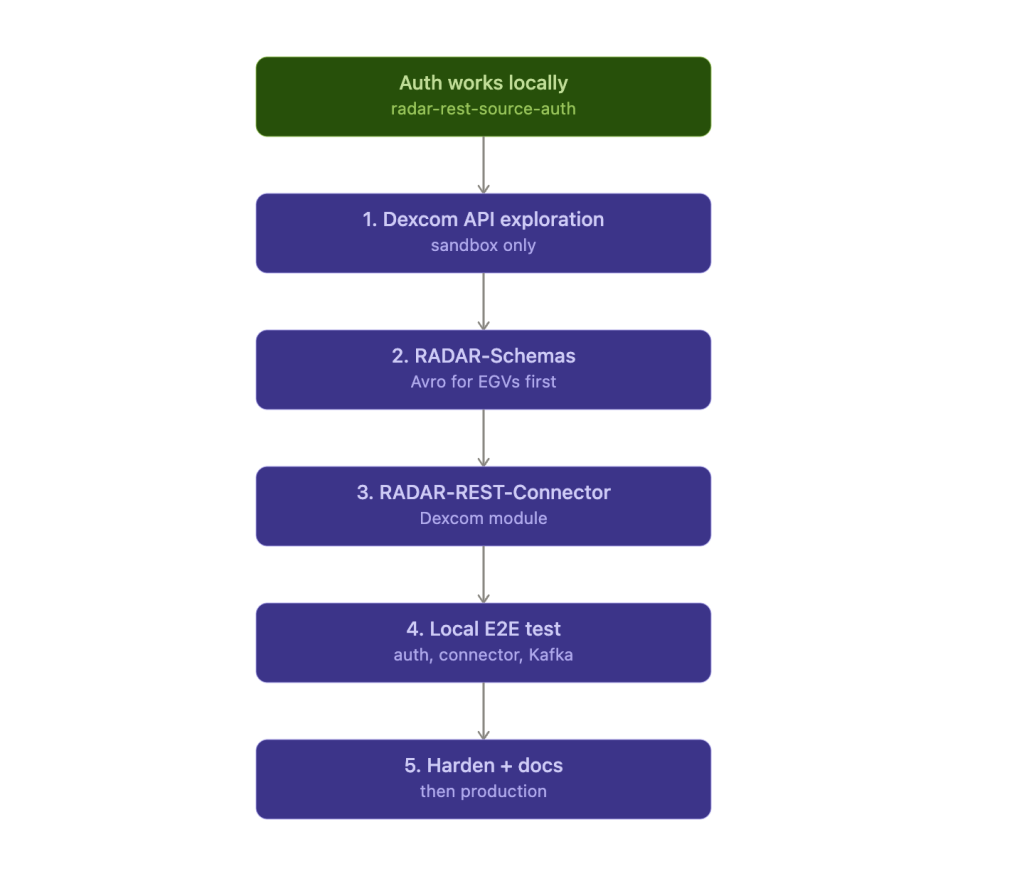
1. Local development workflow:
2. Main development workflow:
My internship experience at Radar-Base:
I came to know Radar Base from one of its participating orgs from Google Summer of Code (GSOC). As an international student in the U.S, I was not able to get my CPT approved from university because of visa regulation, and therefore wanted to participate GSOC since it did not require U.S work authorization.
While researching past orgs from GSOC, the RADAR-base team immediately appealed to me. Having worked with people with health conditions in the past and studying computer science myself, I found the idea of using technology to improve people’s lives deeply meaningful. This was exactly what RADAR-base was doing, which made the internship project especially appealing to me.
My special thanks go to @Yatharth for giving me the opportunity to join the internship, and to @Amos for making the internship possible. I would also like to give a special thanks to @Aditya for his valuable code reviews and guidance throughout the internship.